3.0 Reviews & decisions
People decide. Agents prepare the decision.
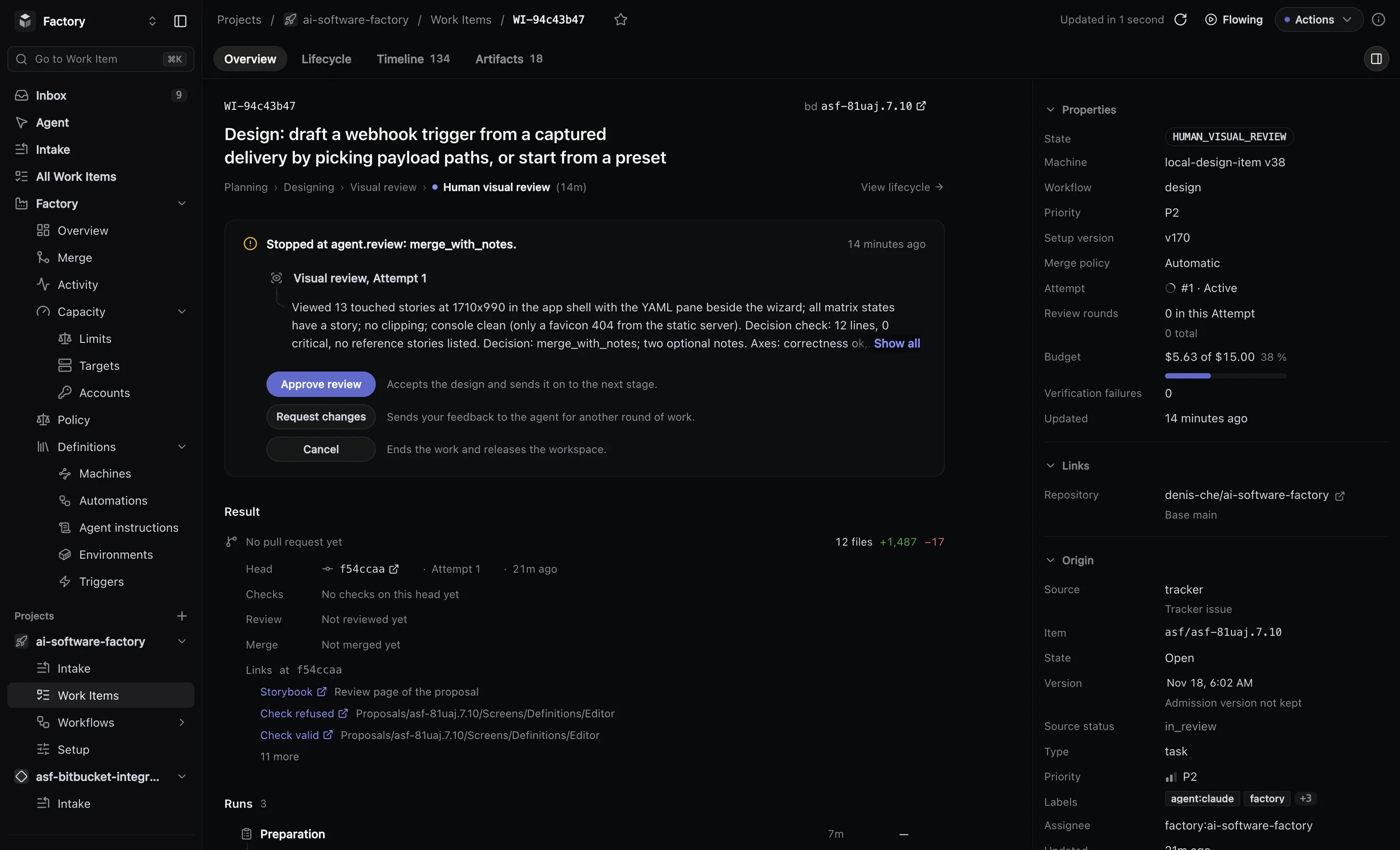
Every change passes the checks your team defines before anyone is asked. When the work needs a call, the factory stops and asks, with the evidence, what each answer will do and its recommendation. Everywhere else the work moves on its own.
3.1 Layers of review
Machines check first. A person looks last.
A change passes the layers your process sets, in order, and any of them can send it back.
- Deterministic checks: an incomplete brief is refused before work starts, and nothing merges without what your definition of done requires.
- Your CI’s required checks, on the exact commit that merges.
- A code review by an agent, with fixes sent back to the coding agent.
- A visual review for interface work: an agent judges screenshots of the screen against the brief.
- A person, where your process requires one.
On the factory that builds itself, 87% of 1,753 changes merged in six weeks with no person stepping in. Our own numbers, not a forecast for your team.
3.2 Decision requests
When it stops, it says why and what each answer will do
The factory stops and asks when the budget runs out, an agent raises a question, checks stay red, the work does not converge, or your merge rules need a person. Every request carries:
- why the work stopped;
- the evidence: runs, checks and reviews;
- what each answer will do to the work;
- the answer the factory recommends.
The work is kept while it waits, and your answer continues it where it stopped.
The answers
- Approve
- Request changes
- Merge
- Retry
- Continue
- Replan
- Cancel
- Raise budget
3.3 Review rounds
Rounds are capped. Nothing loops forever.
Reviewers block on a short, agreed list. Everything else becomes follow-up work instead of another round. Your people see a change only once it has stopped going back and forth.
A short blocking list
A change goes back only for a problem on the list your team agreed.
Follow-up work
Other findings are filed as tasks of their own, and the change moves on. Nothing is fixed silently or forgotten.
A cap on rounds
Fix rounds have a limit. At the limit the factory asks a person how to go on, instead of trying again.
3.4 Pull request review
Review any pull request, not only the agents’ own
The factory reviews pull requests from people and from other tools. The review lands where your team already reads reviews:
- review comments on the pull request;
- a check run with the result;
- no review against old code: if the branch moves during the review, the review is refused instead of posted.
3.5 Where you answer
Answer from the inbox, the task or Slack
Requests come to your people, not the other way round. Who may answer is set by role and project access.
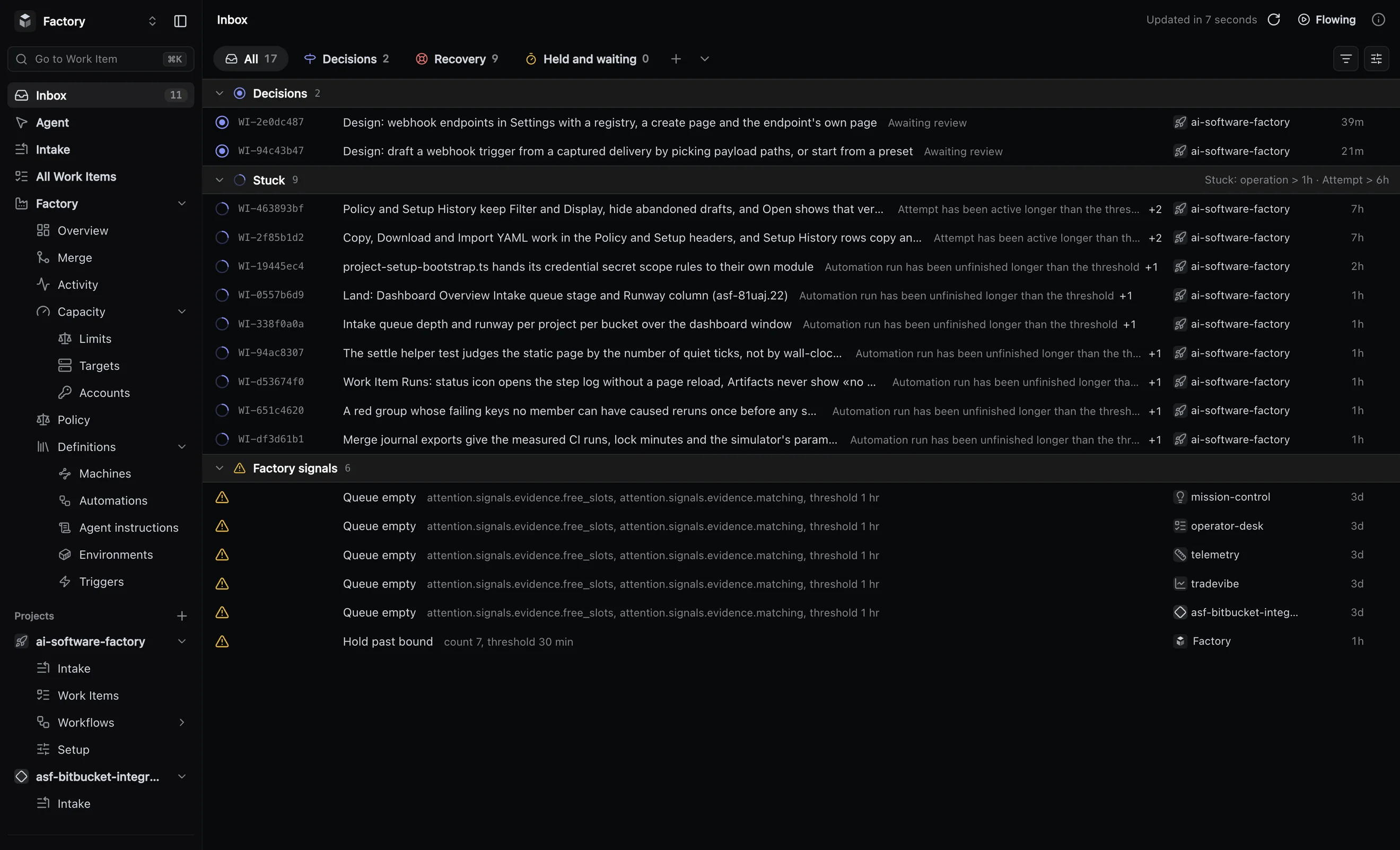
The inbox
One list in the web app of everything waiting for a person.
The task page
Answer on the task itself, next to its timeline, its checks and the stored artifacts of every run.
Slack
The request arrives in Slack with its answers, and the answer you give there goes back to the task.